That developmental change of seeing through illusion and into reality that is so central to wisdom is also being afforded by these higher states of consciousness. What about the de-centering that’s so central to both flow, mystical experiences, and then ultimately to higher states of consciousness?
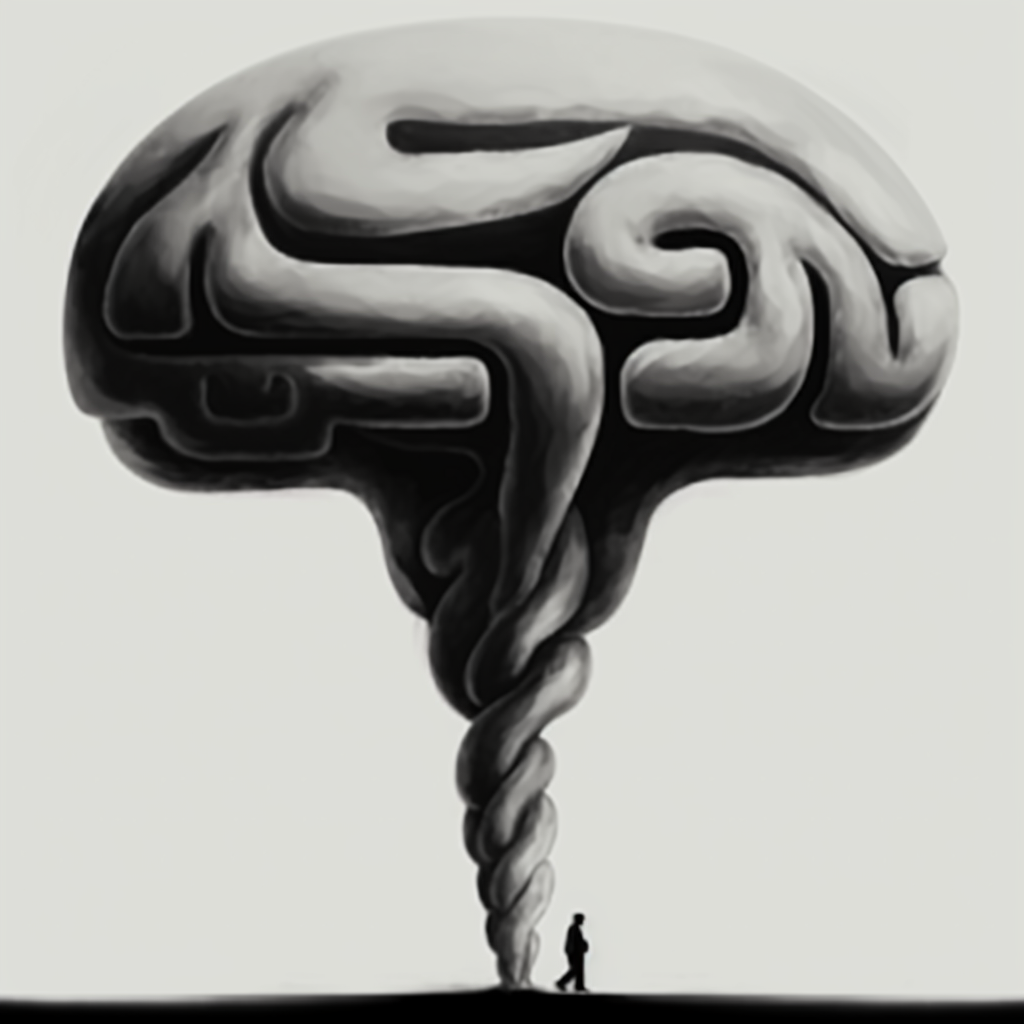
Igor Grossman, has produced quite a bit of good experimental evidence that such de-centering strategies, although this was prefigured in earlier work by the Berlin paradigm, Igor Grossman has done some excellent work on showing that such de-centering strategies are very relevant for bringing about wisdom.
He has work on what he calls the Solomon effect.
Let me describe it to you. You’ll see why these de-centering strategies can be so powerful.
Get people to find a problem that’s very messy, problematic, and that they’re stuck in. Usually it’s an interpersonal problem because, as Sartre said, hell is other people. So is heaven, by the way. He didn’t say that, but our deepest and most pervasive problems are generally problems with other people.
Why?
Because the thing that is, I’ve mentioned this before, that is most predictive of how meaningful your life is is your meaningful relationships to others. The problem is human beings are endlessly complex. So you’re describing this interpersonal problem, and when people describe it, they are of course mesmerized by the mirage of their own egocentric perspective. They describe it without thought, default, from the first-person perspective, and they remain stuck.
Remember this notion of stuckness, we’ll come back to it again when we talk about Gnosticism. Then you get the person to re-describe the same problem from the third-person perspective. You get them to de-center. What will often happen is they will break frame. They will realize the way in which they have been blocked, systematically locked, not solving their problem.
They’ll often have a central insight into how to resolve their problem. This is why it’s called the Solomon effect, because it tends to make you more wise. Think about the radical de-centering that’s going on in these awakening experiences, in these higher states of consciousness. Notice the systematicity of the error of egocentrism. It’s not an error in this problem, or this problem, or this problem.
It’s a systematic error.
That’s why it’s often described with metaphors of being asleep, because when you wake up, you have a systematic change in your consciousness. What’s happening in these higher states of consciousness, in these awakening experiences, you’re getting a transformation, an intervention in systematic error you’re seeing through illusion precisely because of the powerful de-centering that they are affording for you.
That, of course, can be a powerfully traumatic experience. It can be a terrifying experience. Pursuing this in an autodidactic fashion, like all autodidactic, being completely self-taught, is very, very dangerous. Autodidactics tend to get into echo chambers, vicious circles of their own egocentric entombment and entrapment.